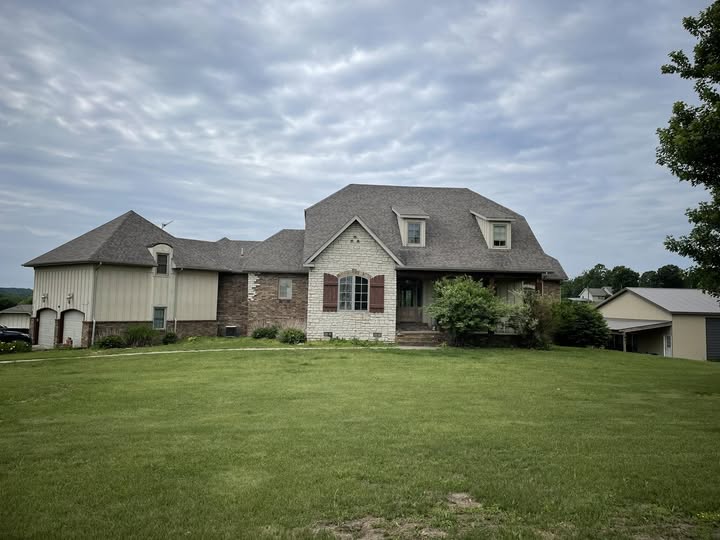
Agents sell pool potential by showing buyers a labeled AI rendering of the listing's own backyard with a pool in it, placed after the real photos and captioned "AI pool rendering — pool not installed". It works best in pool markets, where homes with pools sell at a premium (Redfin measured anywhere from about $11,600 in Phoenix to $95,400 in Los Angeles) and where a listing without one competes against those that have one.
Every spring, buyer searches for homes with pools climb, while plenty of listings with good, buildable yards get passed over because the pool isn't there yet. Listing copy like "room for a pool" asks buyers to imagine it. A rendering shows it. This guide covers where it pays off, how to make and label the image, captions you can copy, and how to handle the buyer's next question: "What would that cost?"
Why Pool Potential Goes Unsold
Buyers react to what they see. A large, empty backyard reads as lawn to mow, not as a future pool, unless the buyer already arrives with a pool project in mind. "Pool-ready backyard" in the description doesn't change that. What changes it is seeing a pool in this yard, at the right scale, next to this house: the step from "interesting" to "I can picture us here."
Where Pool Potential Pays Off
Redfin's study of 2018 home sales measured the price premium for a home with a pool in the metros where pools are common. The premium varies a lot, which tells you where a rendering is worth making:
| Metro | Pool premium (typical home) | Share of sales with a pool |
|---|---|---|
| Los Angeles, CA | $95,393 | 23% |
| Austin, TX | $52,228 | 4.7% |
| Fort Lauderdale, FL | $36,964 | 45.6% |
| Houston, TX | $35,736 | 16.6% |
| Las Vegas, NV | $30,170 | 25.3% |
| Tampa, FL | $29,611 | 29.6% |
| Phoenix, AZ | $11,591 | 32.1% |
| Boston, MA | −$15,484 | n/a |
Two readings matter. Where the share of homes with pools is high (Fort Lauderdale, Phoenix, Tampa), a listing without one competes against many that have one, so showing the potential closes a visible gap. Where the premium is high (Los Angeles, Austin), buyers clearly pay for pools. In cold markets like Boston, a pool can even lower the price, so a rendering is less useful. The figures are 2018 dollars; see does a pool add home value? for all 15 metros and pool ROI by state.
Which Listings to Render
- Pool market: warm climates and neighborhoods where nearby comparable sales have pools
- Room in the yard: roughly 25 × 25 ft of open, fairly level space fits a small pool with a walkway; see small pool ideas for sizes
- Buyers who can fund it: a pool project typically costs $66,000 or more installed before extras, so it's most persuasive in price ranges where buyers can add one
- A visible gap: the listing is otherwise strong but loses on "no pool" against its competition

Step by Step: Render, Label, Publish
- Pick the view. Enter the listing address in USAIPools and work from the satellite view (good for showing the whole lot), Street View, or your own listing photo of the backyard (best for MLS, because it matches the other photos).
- Place a realistic pool. Draw it where a builder plausibly would: inside the setbacks, clear of trees and the septic area. Choose a size the yard supports (from 12 × 20 ft), a shape that suits the house, a deck width and an optional spa.
- Render and review. In about a minute you get a photorealistic before/after. If something looks off, try again; each retry uses one render.
- Label it. Put the label on the image itself and in the caption (see below).
- Publish in the right order. Keep every real photo in the listing; add the rendering after them. Use the before/after GIF for social posts and email, and print the pair for the open house.
- Prepare for the follow-up. Have a rough cost range and two or three local builders' names ready.
Labeling and Disclosure
A pool rendering shows what the yard could look like, and buyers must be able to tell it apart from the home as it is. The REALTOR® Code of Ethics asks members to present a true picture in their advertising, and many MLSs have rules on digitally altered or virtually enhanced photos. In practice:
- Label the image itself, not only the caption: "AI pool rendering — pool not installed"
- Keep the unedited photo of the same view in the listing
- Place renderings after the real photos, never as the main photo
- Check your MLS's rules on altered photos before uploading; they differ by board
- Don't imply a pool is approved or permitted: setbacks, easements and permits depend on the lot and the town (see pool permit requirements)
Captions You Can Use
- MLS photo caption: "AI pool rendering — pool not installed. Shows one possible pool layout for this backyard."
- Listing remarks: "Large, level backyard with room for a pool; see the labeled AI rendering in the photos for one possible layout. Buyer to verify setbacks and permits with the city."
- Instagram / Facebook: "Same backyard, two futures. Slide to see one possible pool layout (AI rendering, pool not installed). DM for a showing."
- Email to a buyer after a showing: "You mentioned wanting a pool, so here's an AI rendering of what one could look like in this backyard. It isn't a quote or an approved plan; I'm happy to share local builders who can give you real numbers."
Answering "What Would a Pool Cost?"
Expect the question, and give a range, not a promise. Nationally, an in-ground pool averages about $66,000 installed; vinyl runs about $35,000–$75,000, fiberglass $45,000–$100,000 and concrete $65,000–$120,000, and decking, fencing, a heater and permits typically add $15,000–$35,000. Point buyers to our pool cost guide and pool loan calculator, then to local builders for real quotes.
Worked example (Tampa): a buyer weighing two similar homes, one with a pool and one without. Redfin's Tampa premium was $29,611 in 2018 dollars; building a pool with the usual extras might cost $96,000. If the price gap between the two homes is well under the build cost, the pool home is usually the better buy for someone who wants a pool now; if the yard is the deciding factor, the rendering helps the buyer see the no-pool home's potential. Either way, you've shown the numbers that matter to the decision.
Working with Pool Builders
Agents in pool markets often keep two or three local builders they trust for buyers who ask. Share the rendering with the builder as a starting brief; it shows the buyer's preferred size and placement. Keep the relationship clean: if a builder offers you a referral fee, check your state's license law and brokerage policy first, and disclose any arrangement to your client.
Frequently Asked Questions
Can I put an AI pool rendering in MLS photos?
Usually yes, if it's clearly labeled and the real photo stays in the listing, but rules on altered photos differ by MLS. Check your board's rules, label the image itself ("AI pool rendering — pool not installed"), and place it after the real photos.
Does showing pool potential raise the sale price?
It doesn't change the home's value; it helps buyers see a use for the yard they might otherwise overlook. In markets where homes with pools sell at a premium, that can mean more interest and showings for a listing that would otherwise lose on "no pool".
How long does it take to make a pool rendering?
About a minute per render after you place the pool. Most agents make two versions (for example a rectangle and a freeform) and use the one that fits the house best.
What size yard is needed for a pool?
Roughly 25 × 25 ft of open space fits a small pool with a walkway, after setbacks. Larger yards make the rendering more persuasive because the pool and the remaining lawn both show.
Is it misleading to show a pool that isn't there?
Not if it's labeled and kept separate from the real photos. The problem is an unlabeled rendering that a buyer could mistake for the current condition of the home.
Differentiate Your Listings with Pool Visualization
Generate a photorealistic before/after pool render for any listing address in about a minute. The first 3 designs are free; the Business plan includes up to 10 renders a day for your listings.
See how it works for agentsSources
- Redfin: Does a Pool Add Value to Your Home?: pool premiums and share of sales with a pool by metro (2018 sales)
- National Association of REALTORS®: The Code of Ethics: truthful advertising (Article 12)
- This Old House: Inground Pool Cost (2026 Guide): installed pool costs
Premiums are Redfin's 2018 figures and vary by neighborhood. This article is marketing guidance, not legal advice; your MLS and state license rules apply.