You can visualize a pool in your backyard by entering your address into an AI tool that fetches your satellite image, identifies the best placement, and renders a photorealistic pool into your actual yard in under 60 seconds. Traditional 3D rendering services cost $500–$2,000 and take 3–7 days, while AI-based tools like USAIPools deliver the same result free for the first 3 addresses, no credit card required.
Deciding whether to add a swimming pool to your backyard is one of the biggest home improvement decisions you'll make. A new pool typically costs between $40,000 and $100,000 — and once it's in the ground, there's no turning back. So how do you know if it's the right choice for your specific yard before spending a single dollar?
That's where backyard pool visualization comes in. In 2026, AI-powered tools can generate a photorealistic rendering of a pool in your actual yard — using satellite or street-view imagery — in under 60 seconds. No architect, no 3D modeler, no expensive design consultation required. Once you can see the pool in your yard, you'll also want to think about pool landscaping to complete the picture.
Why Traditional Pool Planning Falls Short
Most homeowners who start a pool project go through the same journey: they schedule consultations with two or three contractors, each of whom shows them a generic catalog of pool styles. Maybe they get a hand-drawn sketch. Maybe they try to imagine how a rectangular pool would look next to their existing patio.
The problem is that imagination is unreliable — especially for spatial decisions at this scale. How much of the yard would the pool actually consume? Would a freeform shape or a lap pool fit better given the tree line? Would the pool feel cramped against the fence? These are questions you simply cannot answer without seeing your actual yard with an actual pool in it.
Traditional 3D rendering services can fill this gap, but they cost $500–$2,000 per design, take days to deliver, and require a professional to manually model your property from scratch.
How AI Pool Visualization Works
Modern AI pool visualization tools like USAIPools skip the manual modeling step entirely. Here's the process:
Step 1: Enter your address
The system geocodes your address and fetches a current satellite image of your property from Google Maps imagery. This gives the AI an accurate top-down view of your actual yard, including trees, fences, patios, driveways, and any existing structures.
Step 2: AI identifies the optimal pool area
A computer vision model analyzes the yard and identifies where a pool would physically fit — taking into account open space, approximate setback distances, and the natural flow of the yard. This placement can be adjusted manually if you have a specific area in mind.
Step 3: AI renders the pool
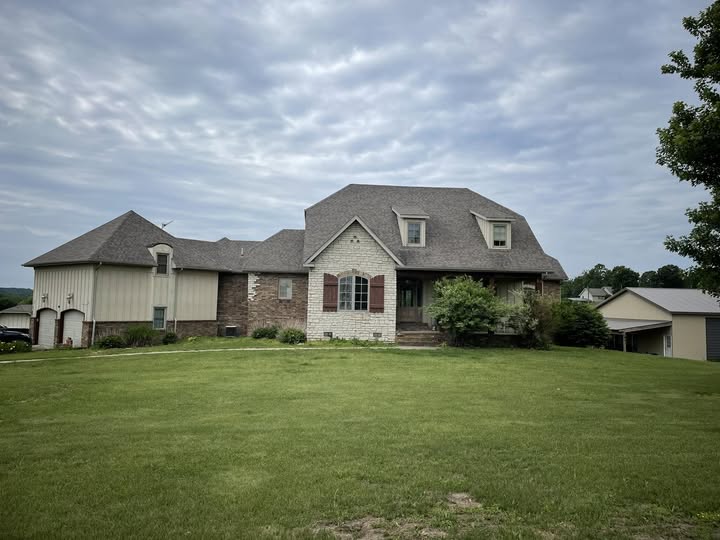
An image generation model inpaints a photorealistic pool into the identified area. The rendering accounts for realistic water color, coping materials, surrounding concrete or decking, and even the lighting conditions of the original satellite image. The result is a before/after pair that shows your real yard — with and without the pool.
The entire process takes under 60 seconds from the moment you submit your address.

What to Look for in the Visualization
Once you have a before/after render of your yard, here are the key things to evaluate:
- Available space: Does the pool feel proportional to your yard, or does it make the space feel crowded? A pool that takes up more than 50% of the usable backyard area can feel overwhelming.
- Proximity to structures: Most building codes require pools to be at least 5 feet from property lines and 10 feet from the house. A satellite render makes it easy to spot potential setback conflicts early.
- Sun exposure: From a satellite view, you can see which parts of your yard get the most unobstructed sun throughout the day based on the orientation of your house and existing trees.
- Access and traffic flow: Would the pool placement block easy movement between the back door and the rear of the yard? Does it leave room for outdoor furniture or a dining area?
- Shape compatibility: Rectangular pools work well in formal, symmetrical yards. Freeform pools often blend better with irregular yard shapes or heavy landscaping.
Pool Visualization vs. Pool Design
It's important to understand what pool visualization is — and what it isn't. A photorealistic AI render tells you whether a pool makes visual and spatial sense in your yard. It does not replace an engineered design, a soil survey, or a building permit application.
Think of it as the first step in your decision-making process. If the visualization shows that a pool would overwhelm your yard, you've saved yourself the cost of a full contractor consultation. If it looks great, you have a compelling visual to bring into those contractor meetings — making every conversation more concrete and efficient.
How Much Does Pool Visualization Cost?
Professional 3D pool renderings from design studios typically cost $500–$2,000 and take 3–7 business days. AI-based tools like USAIPools deliver photorealistic satellite renders in under 60 seconds, with the first 3 addresses free and no credit card required.
For a homeowner who just wants to see whether a pool is even feasible before calling a contractor, the AI route is an obvious first step.
Getting Started
To visualize a pool in your backyard, all you need is your home's street address. USAIPools handles everything else — geocoding, satellite imagery, AI placement, and photorealistic rendering — and emails you the before/after comparison directly.
See Your Backyard With a Pool
Enter your address and get a photorealistic before/after render in under 60 seconds. Free for the first 3 addresses — no credit card required.
Try It Free